Monsoon damage can happen quickly, especially when strong winds, heavy rain, and blowing debris hit your home at the same time. For homeowners, understanding roofing problems after a storm can help prevent leaks and expensive repairs. In severe cases, you may need to replace the roof to restore the home’s protection. If you are concerned about roofing in Surprise, Desert Sands Contracting can inspect your roof and identify storm-related problems before they become worse.
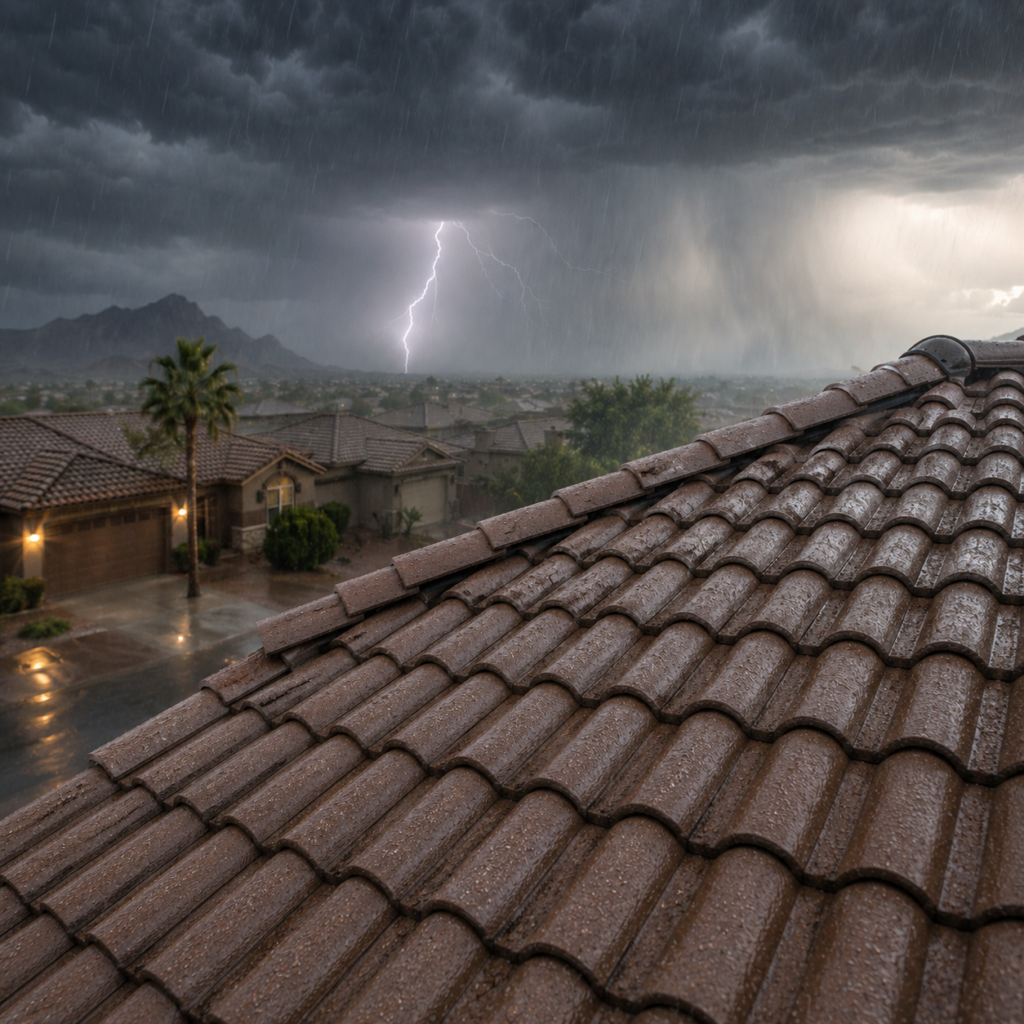
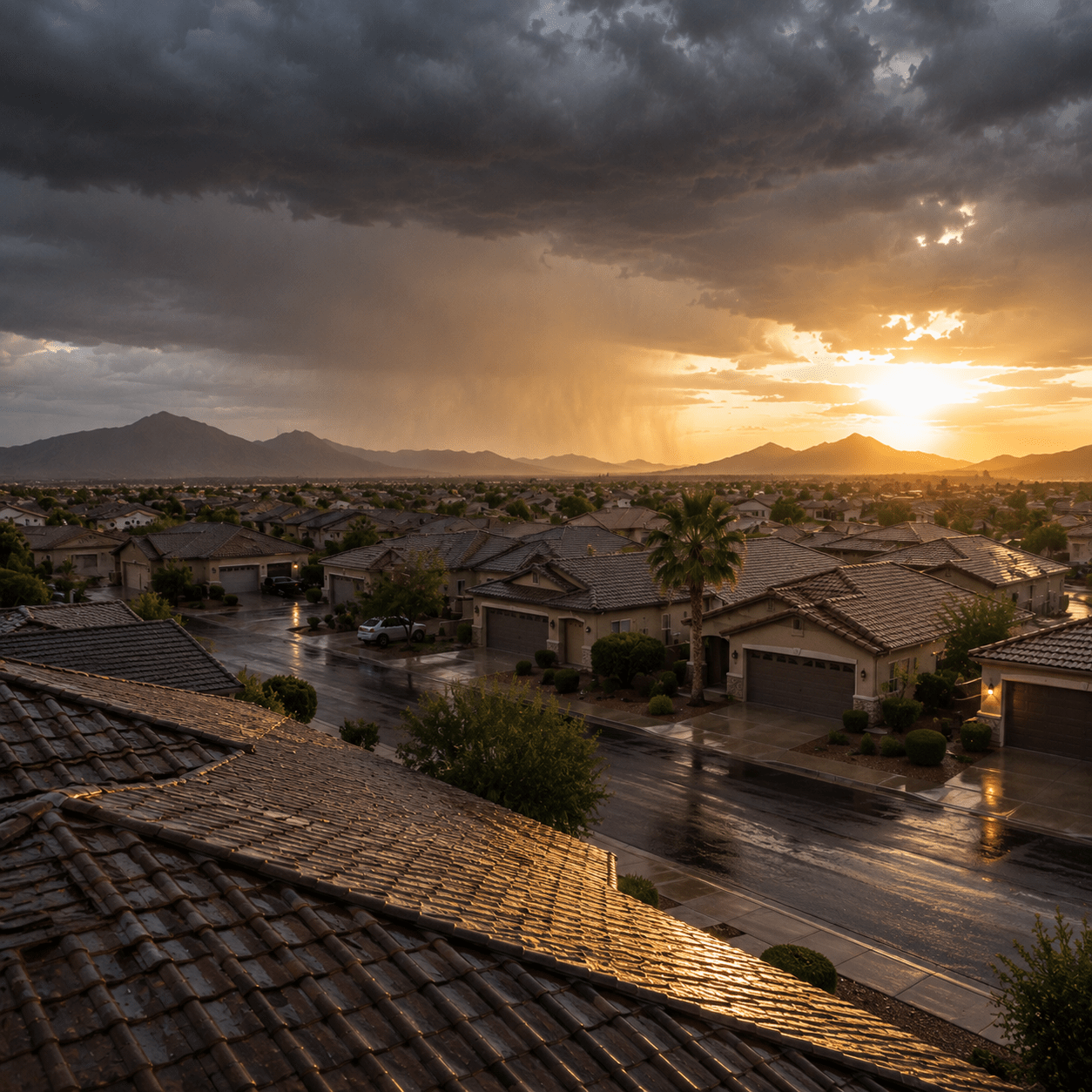
Arizona monsoons are more than just heavy rain. A single storm can bring powerful wind gusts, dust, lightning, hail, and sudden downpours.
Even when everything looks normal from the ground, damage may have occurred in areas you cannot easily see.
How Can Monsoons Damage a Roof?
Monsoon storms can damage a roof through wind, rain, debris, and rapid changes in weather conditions.
Strong winds are one of the biggest concerns. A powerful storm can lift, loosen, crack, or completely remove shingles.
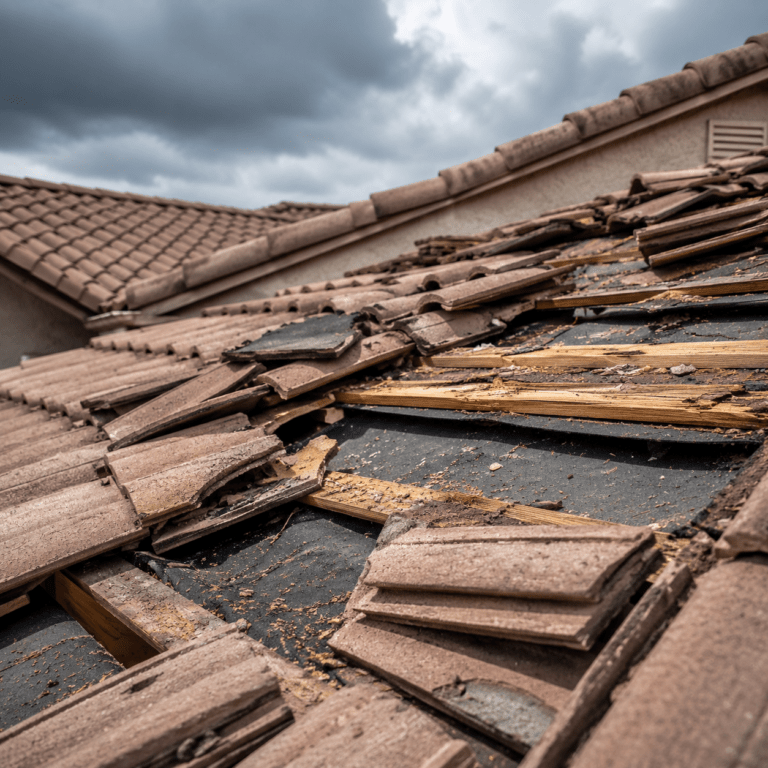
Debris or intense wind can damage tile roofs. Individual tiles may shift or crack when hit by debris or exposed to intense wind.
Once roofing materials move out of position, the protective layers underneath can become exposed.
Heavy rain creates another concern. Water can enter through small openings that were not noticeable before the storm.
That is why a roof does not need to look destroyed to have a problem.
What Are the Signs of Monsoon Damage?
Some storm-related problems are easy to spot. Others require a closer inspection.
After a major monsoon, homeowners should look for missing shingles, cracked tiles, displaced roofing materials, or debris sitting on the roof.
Inside the home, check ceilings and walls for water stains or unusual discoloration.
You may also notice dripping water, damp areas, or musty odors.
However, not every leak appears immediately.
Water can travel underneath roofing materials before reaching a visible area inside your home. As a result, the location of a ceiling stain may not match the actual roof problem.
Professional inspections can help locate these less obvious issues.
Can Monsoon Winds Damage Shingles?
Yes. High winds can lift shingles and weaken their attachment to the roof.
A shingle may settle back into place after the storm. From the ground, it might appear completely normal.
Unfortunately, its seal may already be compromised.
The next storm can lift that same section again, allowing water underneath the roofing system.
Older roofs can be particularly vulnerable because Arizona’s heat and sunlight gradually affect roofing materials.
Therefore, wind damage should not be ignored simply because shingles are still attached.
Can Arizona Monsoons Damage Tile Roofs?
Tile roofing performs well in Arizona, but it is not immune to storm damage.
Strong winds can shift tiles. Meanwhile, flying branches and other debris can crack or break them.
A damaged tile may expose the underlayment beneath it.
The underlayment provides an important layer of protection against moisture. If that material becomes damaged or deteriorated, water can eventually enter the home.
Walking across a tile roof can also cause additional breakage.
For that reason, homeowners should avoid climbing onto the roof after a storm.
What Happens When Water Gets Under the Roof?
Water intrusion can turn a relatively small roofing problem into a larger repair.
Moisture may affect roof decking, insulation, drywall, ceilings, and other materials inside the home.
Repeated exposure can cause additional deterioration over time.
Unfortunately, water does not always enter the living space immediately.
A small opening may allow moisture underneath the roof without producing an obvious ceiling leak.
This makes early inspections particularly valuable after severe storms.
Does Monsoon Damage Mean I Need a Roof Replacement?
Not necessarily.
Many storm-related problems can be repaired when they are caught early. A few missing shingles or damaged tiles do not automatically mean the entire roof needs replacement.
The roof’s age, condition, materials, and extent of damage should all be considered.
However, widespread storm damage can change the situation.
A roof replacement may be recommended when damage affects large sections of the system or when an older roof already has significant deterioration.
The goal should be to determine what the roof actually needs rather than automatically replacing everything.
Should I Have My Roof Inspected After a Monsoon?
An inspection is worth considering after a particularly strong storm, especially if your neighborhood experienced high winds or heavy rain.
You should also schedule an inspection if you notice missing materials, leaks, ceiling stains, or debris impacts.
Even without visible warning signs, an inspection can provide additional peace of mind.
This is especially important for older roofing systems.
Catching a small issue today can prevent it from becoming a much larger repair after the next Arizona storm.
Why Monsoon Season Is Tough on Surprise Roofs
Homes in Surprise face a challenging combination of extreme heat and seasonal storms.
Throughout summer, roofing materials are exposed to intense sunlight and high temperatures. Then monsoon conditions can introduce sudden wind, rain, and airborne debris.
That combination puts additional stress on roofing systems.
The same conditions affect homes throughout the West Valley, including Peoria, Glendale, Sun City, Buckeye, and surrounding communities.
Preparing before storms arrive and checking the roof afterward can help homeowners stay ahead of unexpected problems.
Monsoon Damage Should Be Checked Before It Gets Worse
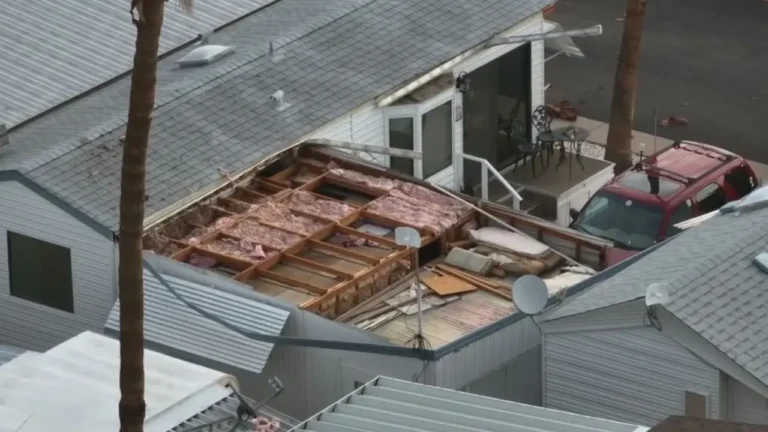
A monsoon does not have to tear off an entire section of your roof to cause trouble.
Loose shingles, cracked tiles, damaged flashing, and small openings can eventually allow moisture into the roofing system.
After a severe storm, pay attention to changes around your home.
If something looks unusual, having it inspected early can help you understand the extent of the damage and your available options.
Desert Sands Contracting provides professional roofing services for homeowners in Surprise, AZ and surrounding West Valley communities. Whether your roof needs an inspection, repair, or replacement, our team can help determine the right next step.
Think your roof may have been damaged during a monsoon? Contact Desert Sands Contracting to schedule a professional roof inspection.