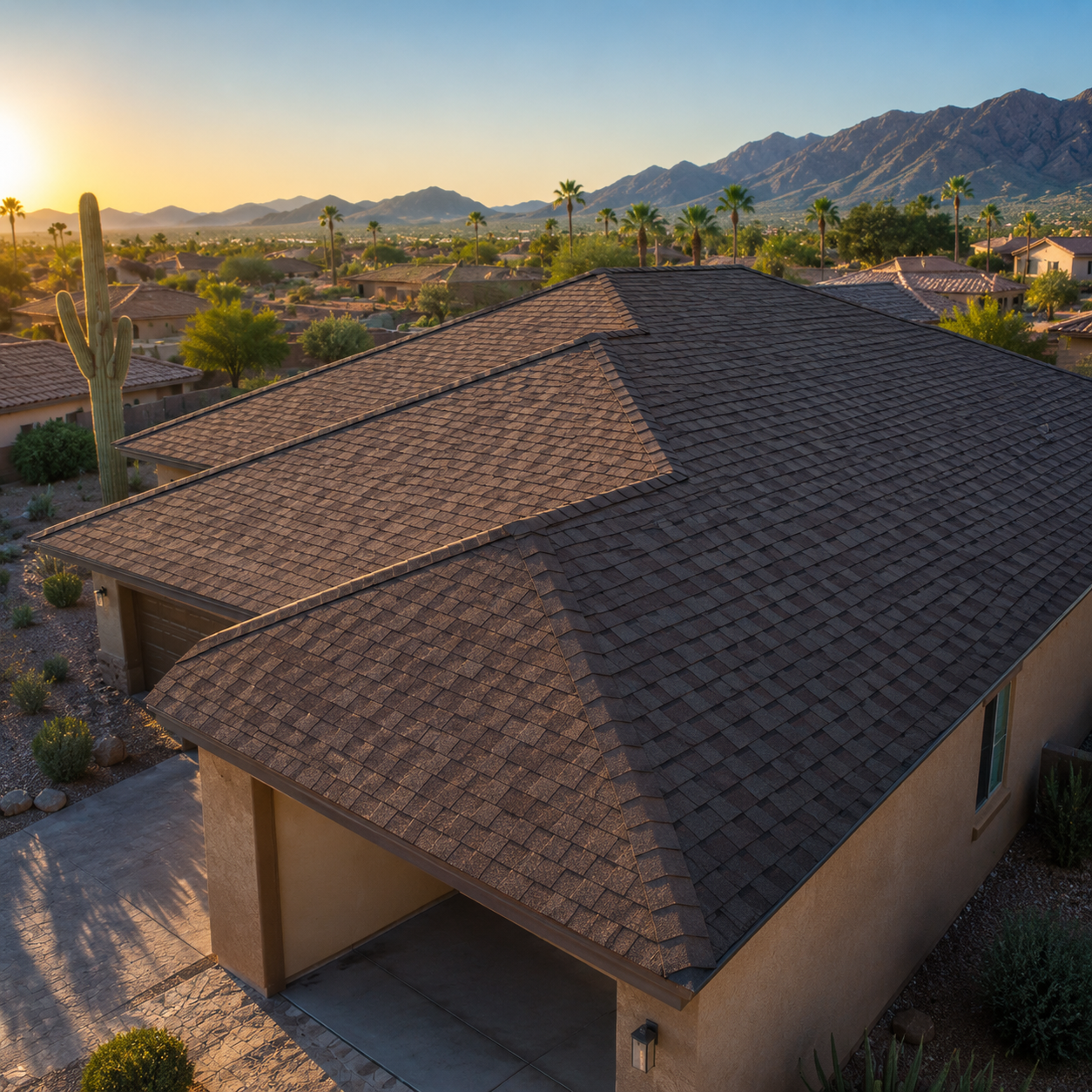
Arizona summers are known for intense sunshine, and many homeowners wonder if shingles can survive the constant heat. If you own a home in Surprise, investing in quality roofing is essential because the desert climate puts every roof to the test. Understanding how high temperatures affect Roofing materials can help you prevent costly repairs and extend the life of your home’s protection.
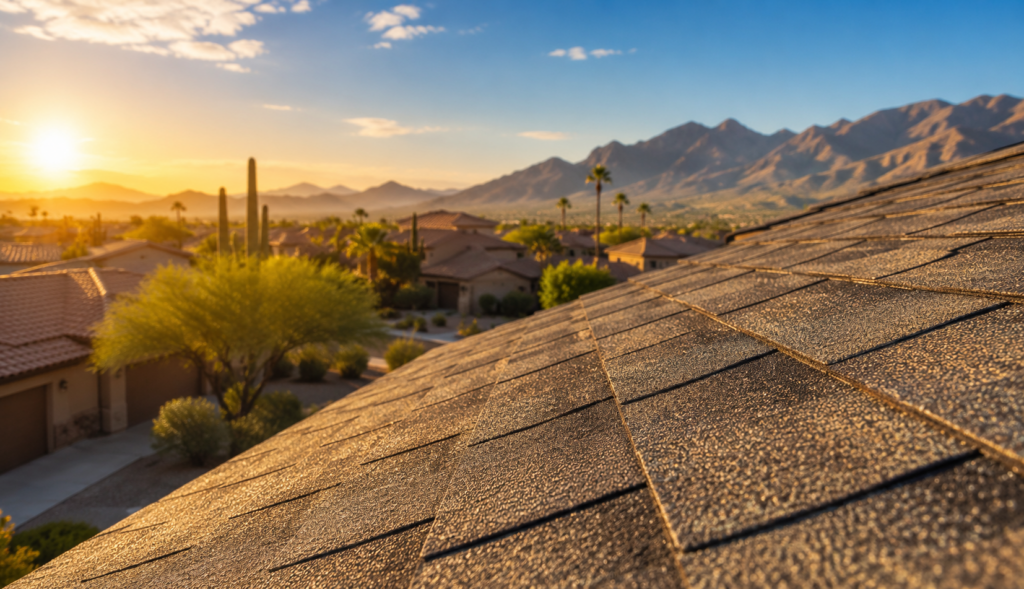
How Shingles Hold Up Against Arizona Heat
Many people assume shingles simply sit on a roof without changing. However, roofing materials constantly expand and contract as temperatures rise and fall.
During the summer, roof surfaces in Arizona can exceed 160 degrees. That level of heat places continuous stress on asphalt shingles.
While quality shingles are designed for hot climates, they are not indestructible. Years of direct UV exposure slowly wear away their protective surface.
Eventually, the material becomes less flexible. Small problems can begin forming long before leaks appear.
What Happens to Shingles During Extreme Heat?
Heat itself rarely causes a roof to fail overnight. Instead, it speeds up the natural aging process.
The sun’s ultraviolet rays gradually break down the asphalt compounds. Protective granules may also loosen over time.
As a result, shingles become more brittle. They may eventually crack, curl, or split during seasonal temperature changes.
Strong monsoon winds can then lift weakened shingles more easily. Even a minor storm becomes a bigger concern when roofing materials have already deteriorated.
UV Rays Cause More Damage Than Temperature Alone
Many homeowners blame the thermometer. In reality, sunlight often creates the biggest problem.
Ultraviolet radiation continuously attacks the outer layer of shingles. This process happens every day throughout the year.
The damage is gradual. Therefore, many homeowners never notice it until visible wear develops.
A roof may still look acceptable from the ground. Meanwhile, the protective layers could already be weakening.
Poor Ventilation Makes Things Worse
Heat inside the attic also affects roofing performance. Without proper ventilation, attic temperatures climb even higher than outdoor conditions. That trapped heat transfers upward into the roof system.
Consequently, shingles experience stress from both directions. Proper airflow helps regulate temperatures. It also reduces moisture buildup after Arizona’s monsoon season.
A balanced ventilation system supports longer roof life while improving overall energy efficiency.
Signs Your Shingles May Be Heat Damaged
Heat-related damage often starts small. Fortunately, several warning signs are easy to recognize.
Watch for:
- Curling edges
- Cracked shingles
- Missing granules in gutters
- Faded roof color
- Soft or brittle roofing materials
- Loose shingles after windstorms
- Uneven roof appearance
If you notice one or more of these signs, scheduling a professional inspection is a smart decision.
Early repairs usually cost much less than replacing an entire roofing system.
Arizona Monsoons Add Another Layer of Stress
Summer brings more than extreme heat. Monsoon storms often arrive with heavy rain, dust, and powerful wind gusts.
Heat-weakened shingles may already have tiny cracks. Rainwater can eventually work beneath those openings.
Wind-driven debris also removes protective granules. Over time, exposed asphalt deteriorates even faster.
This combination of heat and seasonal storms creates one of the toughest roofing environments in the country.
Can Newer Shingles Handle Arizona Better?
Modern shingles have improved significantly over the years.
Many manufacturers now produce products specifically designed for hotter climates.
These shingles often include:
- Better UV-resistant coatings
- Stronger fiberglass reinforcement
- Improved flexibility
- Enhanced wind resistance
- Longer manufacturer warranties
Even with these improvements, regular maintenance remains important. No roofing material lasts forever under constant Arizona sunshine.
How Homeowners Can Protect Their Shingles
Fortunately, several simple habits can help maximize roof life.
- Schedule annual roof inspections before and after monsoon season.
- Remove leaves and debris that trap moisture.
- Keep gutters flowing properly.
- Trim tree branches that scrape across the roof.
- Repair small issues before they become expensive problems.
Most importantly, avoid walking on shingles during the hottest part of the day. High temperatures soften asphalt, making accidental damage more likely.
Why Professional Roof Inspections Matter
Some roofing problems remain hidden from the ground. Loose flashing, lifted shingles, and worn sealant can go unnoticed for months.
Professional inspections identify these issues early.
A trained contractor also understands how Arizona weather affects different roofing systems.
Small maintenance projects today often prevent major repairs tomorrow. That proactive approach saves homeowners both time and money.
Surprise, AZ Homes Face Unique Roofing Challenges
Summer temperatures regularly exceed 110 degrees. Dust storms create additional wear. Monsoon winds test every roof.
Because of these local conditions, routine inspections become even more valuable.
Homeowners who stay ahead of maintenance usually enjoy longer-lasting shingles and fewer unexpected repairs.
Trust Desert Sands Contracting to Protect Your Roof
Arizona heat absolutely can damage shingles over time. The process is gradual, but the effects are real.
UV exposure, attic temperatures, dust storms, and monsoon weather all contribute to roofing wear.
Fortunately, early inspections and timely maintenance help extend the life of your roof.
If you live in Surprise or the surrounding communities, Desert Sands Contracting is ready to help. Our experienced team understands the unique demands Arizona weather places on roofing systems. Whether you need an inspection, repairs, or expert advice, we’re committed to protecting your home with dependable workmanship and honest service.
Protect your shingles before the next heat wave. Contact Desert Sands Contracting today to schedule a professional roof inspection in Surprise, AZ and the surrounding communities.